Dental hygienist vs dentist pay: the BLS medians side by side
The Bureau of Labor Statistics reports a median annual wage of $176,110 for dentists in May 2025, or $84.67 an hour. Dental hygienists had a median of $98,100, or $47.16 an hour. That puts the dentist median $78,010 above the hygienist median, a ratio of about 1.8 to 1. For context, BLS gives $50,980 as the median for all U.S. occupations that year, so both jobs sit well above the national middle.
The dentist figure covers every kind of dentist. BLS also lists it by specialty: general dentists had a median of $170,950, and they hold about 141,900 of the 161,400 dentist jobs, so the general dentist is the typical case. Dentists in other specialties earned $224,990, prosthodontists $311,180, orthodontists $289,140, and oral and maxillofacial surgeons $352,220, roughly 3.6 times the hygienist median. Hygienists have no comparable specialty ladder in the BLS data. For hygienist pay in more detail, see the dental hygienist salary guide, which uses the earlier May 2024 release.
Where the two pay ranges overlap
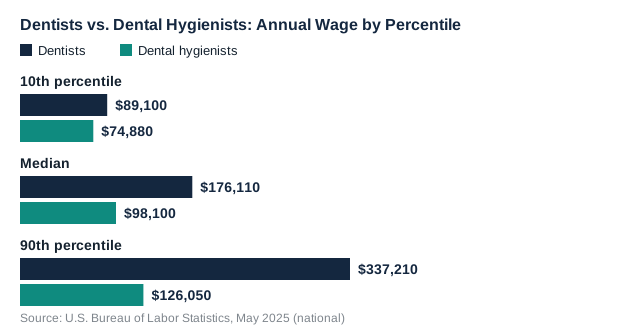
A median compares the middle of each group and hides how many people fall in the other group's range. The 10th percentile for dentists was $89,100 in May 2025, and BLS says the lowest-paid tenth earned less than that. Hygienists had a median of $98,100, so a dentist in the bottom tenth earned about $9,000 less than the typical hygienist. The overlap shows from the other side too: a hygienist at the 90th percentile, above $126,050, earned more than the $89,100 mark that separates the lowest-paid tenth of dentists from the rest.
The spread inside each job is very different. Dentists range from under $89,100 to over $337,210 between the 10th and 90th percentiles, a gap of $248,110. Hygienists range from under $74,880 to over $126,050, a gap of $51,170, about one-fifth as wide. A hygienist's pay is bunched close to the median. A dentist's pay moves a lot more, and BLS says dentist wages vary with location, hours worked, specialty, and years in practice.
Schooling and licensing: a 3-year program vs a doctoral degree
BLS lists an associate's degree in dental hygiene as the typical entry-level education for a hygienist, and says programs usually take 3 years. Every state requires hygienists to be licensed. In most states that means a degree from an accredited program plus written and clinical exams, and hygienists must complete continuing education to keep the license.
A dentist needs a Doctor of Dental Surgery (DDS) or Doctor of Dental Medicine (DMD) degree from an accredited dental program. Most programs expect applicants to hold at least a bachelor's degree first, and dentists must pass written and clinical exams for a state license as well. Dentists who want a specialty add postdoctoral training after dental school, and BLS says oral and maxillofacial surgery programs typically take 4 to 6 years. This site's guide to how long it takes to become a dentist walks through the full timeline. BLS does not report tuition or student debt, so the pay figures above say nothing about what each path costs to complete.
What each job does and who supervises whom
BLS describes dentists as the ones who diagnose and treat problems with teeth, gums, and related parts of the mouth. They remove decay, fill cavities, and repair fractured teeth, and those in private practice also handle administrative work such as bookkeeping and ordering equipment. Hygienists examine patients for signs of oral disease, remove tartar, stains, and plaque, apply sealants and fluorides, and teach patients about oral health. BLS notes that dentists in private practice employ and supervise hygienists.
How much supervision a hygienist actually works under is set state by state. BLS says the tasks hygienists may perform, and how closely a dentist must supervise them, vary by state and by setting, and that in some places hygienists may work without a dentist's direct supervision. A few states also allow hygienists with extra training, sometimes called dental therapists, to provide some restorative services. Anyone comparing the two jobs should check their own state board, since the national description covers a range of rules.
The setting is similar. Offices of dentists employ 94% of hygienists and 78% of dentists, and another 12% of dentists are self-employed. Inside those offices, the median was $98,280 for hygienists and $173,760 for dentists in May 2025. On schedules, BLS says many hygienists work part time and some work for more than one dentist, while many dentists work less than 40 hours a week and some work considerably more. Because of that, an hourly or annual median describes the pay level, not what a particular schedule earns over a year. Our hygienist duties guide covers the day-to-day work in more detail.
Employment and outlook for both jobs
BLS counted about 225,300 hygienist jobs and 161,400 dentist jobs in 2025, about 1.4 hygienists for every dentist. Both are projected to grow faster than the 3% average for all occupations from 2025 to 2035. Hygienist employment is projected to rise 8%, about 17,900 jobs, and dentist employment 6%, about 9,000 jobs.
Yearly openings favor the hygienist side by a wide margin. BLS projects about 15,000 openings a year for hygienists and about 4,800 for dentists, roughly 3.1 to 1. BLS says most openings come from workers who move to other occupations or leave the labor force, such as retirees, so the larger hygienist workforce accounts for part of the gap. BLS ties dentist demand to an aging population and to each generation keeping more of its natural teeth, and hygienist demand to the link between oral and general health, wider access to hygiene services, and preventive care.